Data Science Week 2026
What is the Data Science Week?
The goal of the data science week is to introduce interested students and staff to data science in a fun and cooperative way, and help create a community of data scientists at the University of Twente, the faculty of Behavioural and Management Sciences, and beyond. BDSi and DSI organize various events during the week, including a datathon, contextual speakers, expert lectures, hands-on workshops, and a networking drink.
Experienced research data scientists will provide lectures on the most important tools in a data scientists’ toolbox; data wrangling, modelling, and communicating results. These lectures will be structured to support the datathon materials, but can be attended without participating in the datathon itself. The lectures are followed by a hands-on practical session in which the lunch lecturerer - supported by a team of motivated coaches - will guide participants in applying the lecture materials to their datathon submissions.
Expert (guest) speakers will be hosting lunch talks during the week to provide a deeper background and give context to the topics and methods covered in the lectures and datathon. Throughout the week there will be ample time for socialization and networking, as well as a poster presentation session and networking drink on Thursday afternoon.
Sign up now
Places are limited and the dates are filling up. Register soon to reserve your spot.
Data Science Drinks & Poster Session
Come join us for a drink, updates on the latest BMS Data Science in research, and an excellent networking opportunity!
Datathon
A datathon is an event in which teams collaborate and compete to create a solution to a shared problem. By learning from experts and peers and immediately applying your skills on a relevant and engaging real-world dataset, the BDSi datathons provide a great environment for both students and staff, beginners and experts to further hone their skills. For the 2026 datathon, we have prepared a dataset of academic papers and citations, and will cover complex systems, network science, and the determinants of academic success.
Speakers
(Almost) every lunch break (12:45 - 13:30), expert speakers from across the University of Twente and beyond will give talks on various topics surrounding complex systems, network science, author networks, citation indices, and academic success. From a broad overview of the roots and likely future of the field, practical applications for social research, to legal and ethical implications - there is something here for everyone to enjoy. All the talks are meant to broaden and enrich the discussion around the data science week, and can be enjoyed with or without participating in the datathon or any of the workshops.


Pieter Trapman is an Associate Professor of Probability and Statistics at the Faculty of Science and Engineering at the University of Groningen, the Netherlands.
His epidemic research focuses on the mathematical and stochastic modeling of infectious diseases, with an emphasis on how social structures (e.g., households and contact networks) and control measures influence outbreaks.


Leto Peel is an Assistant Professor in the Department of Data Analytics and Digitalisation at Maastricht University. His research focuses on machine learning for complex networks, with an emphasis on probabilistic generative models and Bayesian inference for community structure and network dynamics.


Akrati Saxena is an Assistant Professor at Leiden University and leads the Algorithmic Fairness (AlFa) research group within LIACS. Her work sits at the intersection of complex networks, computational social science, and algorithmic fairness, focusing on bias and fairness in networked systems.

Nan Chen is a PhD candidate at the University of Twente working in network data science and machine learning. Her research explores how network science methods can uncover structure and dynamics in complex systems, spanning brain networks and ecological networks.
Stay tuned for updates!
We’re coordinating with speakers inside and outside the UT, and will update the website once more details are known.
Lectures & Practicals
In the afternoon (13:45 - 15:30, Tuesday - Friday) expert data scientists from BDSi and our partners will provide a lecture on the most important tools in a data scientists’ toolbox; data wrangling, feature engineering, modelling, and communicating results. These lectures will be structured to support the datathon materials, but can be attended without participating in the datathon itself.
After a short coffee break, the lecture will be followed by a hands-on practical session (~14:45 - 15:30). During these this time, the lecturer - supported by a team of motivated coaches - will support participants in applying the lecture materials to their datathon submissions. While these sessions are meant to accompany the days’ lecture, they can be attended by any datathon participants. Coaches will be on hand to answer any questions about the days’ lecture, the datathon, or data science in general.
Posters & Drinks
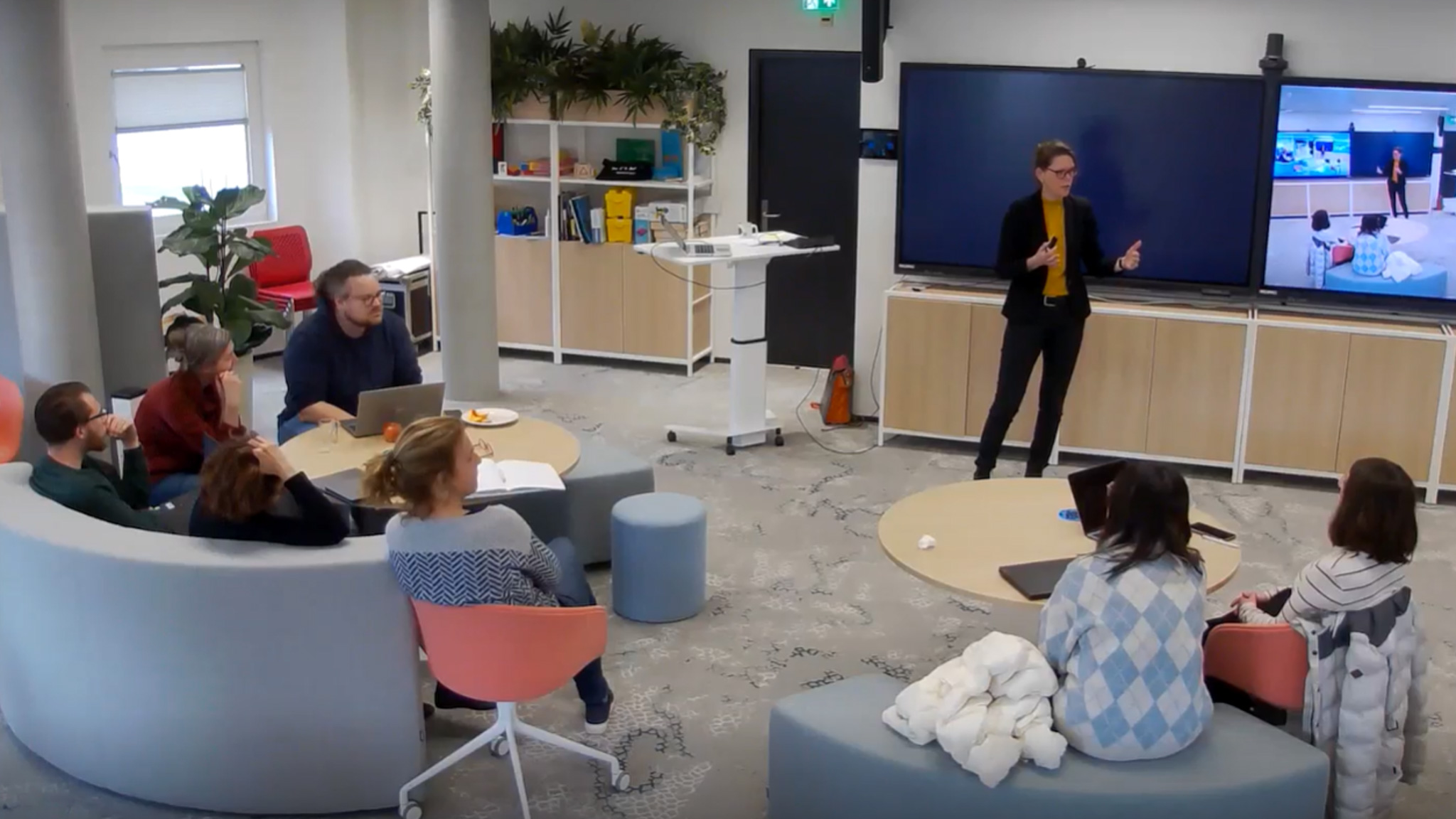
On thursday afternoon, we invite all data science week participants as well as anyone interested in data science at the University of Twente to join us for a poster presentation and drinks. This is a great opportunity to mingle with the other teams, and create lasting connections with peers and data science experts!
Certificates & TGS credits
All participants in the Datathon will get a signed certicifate of participation, listing the lectures and workshops they attended. PhD candidates (and of course PdEng, etc.) who attend the lectures and workshops and participated in the datathon receive a Twente Graduate School (TGS) certificate for 0.5 ECTS.
Competition
The team with the best solution will receive the coveted BDSi Data Science trophy. All teams will also be asked to share their solutions, problems, and learning experience during the final presentations.
Who can join?
Staff, students, family, and friends
Everyone related to the University of Twente and their friends and family can join any of the events during the Data Science Week. The lunch talks in particular are meant to be open to everyone who has an interest in the topic.
The datathon is open to both novices and experts, and everyone in between. You can join as a team, alone, or skip it altogether and only participate in the workshops. As long as one person in the team is affiliated with the University of Twente, you’re free (in fact, encouraged!) to invite friends, (external) colleagues, and/or family to join your team. If you do join alone, you can choose to be assigned to a team with other data science enthusiasts, or go at it alone.
What is required to compete in the datathon?
Some experience with R or Python
Some programming knowledge is required!
You'll need to have a basic idea of either R or Python in order to follow along with the lectures and practicals. Materials will always be prepared for R, and when possible for Python as well.
While we will do our best to introduce data science topics in the various workshops without relying on code, a basic understanding of R and/or Python will make it much easier to follow along.
If you have some experience with other programming languages, you should be able to follow along with a little preparation. More information on installing and using R can be found in the What can I do to prepare for the datathon? section.
If you're new to programming in general or would like a deeper understanding of R, and would rather learn from one of our colleagues, the Cognition, Data and Education (CoDE) section provides courses and materials aimed at teaching staff and Johannes Steinrücke teaches half-day introduction to R and data visualization in R workshops for PhD's (and EngD's).
If you’re confident you can participate in the datathon in another programming language, you’re more than welcome to do so (we challenge you to try in C, Fortran, Brainf***, or JavaScript). Just be aware that we probably can’t offer support if or when you get stuck.
What can I do to prepare for the datathon?
Get a team
First off, get a team together. The datathon is meant to be a collaborative experience where you work alongside a variety of expertises. While you can compete on your own, we strongly suggest working together.
Further reading
If you’re looking for more information, a competitive edge, or just a good way to spend some time, we can recommend some more reading materials:
An Introduction to Statistical Learning is a free to download book providing an excellent introduction to practical machine learning using both R and Python.
R for Data Science is a free online book compiled by Hadley Wickham and a long list of community contributors, covering the whole gamut of modern data science in R. It is well worth a look, and a good reference even for experienced data scientists.
Kaggle.com provides resources to get started with Kaggle, as well as a long list of competitions that are approachable for beginners - with code and discussions available from hundreds of other participants. Trying your hand at a competition or two is a good way to spend a rainy weekend.
Sign up now
Places are limited and the dates are filling up. Register soon to reserve your spot.
Data Science Drinks & Poster Session
Come join us for a drink, updates on the latest BMS Data Science in research, and an excellent networking opportunity!
Schedule
The 2026 Data Science Week takes place from June 15th to June 22nd.
Further details will be made available in the coming weeks and months.
Monday
June 15
Walk-in and registration
13:20 - 13:30, Langezijds 2516 (InstructionLab)
Welcome to Data Science Week
13:30 - 13:40, Langezijds 2516 (InstructionLab)
Introduction: Complex Systems and Citation Prediction
13:45 - 14:30, Langezijds 2516 (InstructionLab)
Opening of the data science week. Anna provides a short introduction to complex systems and our datathon problem, citation prediction. Anna will give an overview of the schedule, and how to participate in the datathon.
Coffee Break: Group Formation
14:30 - 14:45, Langezijds 2516 (InstructionLab)
Workshop: An Introduction to research code publishing
14:45 - 15:30, Langezijds 2516 (InstructionLab)
This workshop introduces a practical workflow designed to enhance the impact and reproducibility of your research code. Participants will learn how to manage their software outputs while aligning with the University of Twente (UT) data management guidelines. This workshop primarily targets first-year UT PhD candidates and researchers interested in learning to code. The main highlights include learning how to:
- Assess research code as a primary scientific output.
- Apply the UT research code management workflow.
- Evaluate the significance of research code quality, reuse, and reproducibility.
- Leverage the benefits of the UT research software policy, guidelines, and management plan.
Open Practical: Getting Data, Setting up the repository, first steps in Git and R
15:45 - 16:30, Langezijds 2516 (InstructionLab)

This open practical session gives you time to get started with the datathon. Work on your own pace with getting the data, setting up your repository, and taking your first steps in Git and R. Anna and Karel will be on hand to answer questions and provide guidance.
Tuesday
June 16
Lunch talk: Success, collaborations and the networks we keep
12:45 - 13:30, Citadel T300 (Teaching and Learning Lab)
Leto Peel is an Assistant Professor in the Department of Data Analytics and Digitalisation at Maastricht University. His research focuses on machine learning for complex networks, with an emphasis on probabilistic generative models and Bayesian inference for community structure and network dynamics.
What makes a scientific career succeed? We tend to reach for the obvious answers — papers, citations, titles — but science itself is now something we can study as data: a vast, shifting network of who builds on whom and who works with whom. I will take a look at what that network can tell us, from the shape of science as a whole down to the collaboration patterns of individual researchers, before turning the question back on itself. We count certain things as success — but what are we really measuring, and what slips through?
Lecture: Text Analysis with local LLMs
13:45 - 14:30, Citadel T300 (Teaching and Learning Lab)
Workshop: Topic Modelling, Embeddings and Classification with LLMs in R [Tidytext]
14:45 - 15:30, Citadel T300 (Teaching and Learning Lab)
This workshop covers setting up APIs for local LLMs, extracting embeddings from text, and performing text clustering and topic modelling. Participants will explore prompt engineering and text classification techniques using LLMs, all while working with the Tidytext package for handling text data in R.
Open Practical: setting up local LLMs, more text analysis help with R
15:45 - 16:30, Citadel T300 (Teaching and Learning Lab)
This open practical session gives you time to apply today's lecture materials to your datathon work. Set up your local LLM, experiment with text analysis techniques in R, and get help from Anna and Karel who will be on hand to answer questions and provide guidance.
Wednesday
June 17
Lecture: complex networks
13:45 - 14:30, Citadel T300 (Teaching and Learning Lab)
Workshop: Network Analysis with R [Tidygraph]
14:45 - 15:30, Citadel T300 (Teaching and Learning Lab)
This workshop introduces network analysis using the Tidygraph and igraph packages in R. Participants will learn to visualize networks, extract key metrics such as degree centrality and cluster coefficient, and apply the Leiden algorithm to detect communities within networks.
Open Practical: Q&A and free coding
15:45 - 16:30, Citadel T300 (Teaching and Learning Lab)
This open practical session gives you time to apply today's lecture materials to your datathon work. Work on your own pace with network analysis, and get help from Anna and Karel who will be on hand to answer questions and provide guidance.
Thursday
June 18
Lunch talk: Epidemics and networks: When does heterogeneity matter?
12:45 - 13:30, Citadel T300 (Teaching and Learning Lab)
Pieter Trapman is an Associate Professor of Probability and Statistics at the Faculty of Science and Engineering at the University of Groningen, the Netherlands.
His epidemic research focuses on the mathematical and stochastic modeling of infectious diseases, with an emphasis on how social structures (e.g., households and contact networks) and control measures influence outbreaks.
We will discuss stochastic models for the spread of infectious diseases in homogeneous populations and in populations structured through a random network. We introduce some important quantities, such as the basic reproduction number, the (often observable) real time growth rate of the epidemic and herd-immunity threshold.
We show that the relationship between the real time growth rate and the basic reproduction number is quite insensitive to the underlying network structure. While the underlying network structure is important for the herd immunity level, if immunity is obtained through spread of the disease and not through vaccination.
This talk is based on joint work with F Ball, JS Dhersin, VC Tran, J Wallinga and T Britton in Journal of The Royal Society Interface, 2016 and with T Britton and F Ball in Science, 2020
Lecture: Visualization
13:45 - 14:30, Citadel T300 (Teaching and Learning Lab)
This lecture explores the principles and purpose of effective data visualization, covering how to craft visualizations that gain insight and save time by highlighting key patterns. Participants will learn what makes a good visualization — where data, story, goal, and visual form complement each other — and explore the grammar of graphics and LangVIS as useful frameworks for understanding the building blocks of visualizations.
The lecture also addresses how visualizations can mislead and how to recognize bias in chart design. Participants will leave with practical guidance on both crafting and viewing visualizations: how to present data clearly without distortion, provide appropriate context, and ask critical questions about the visualizations we encounter in academia as well as in our daily life.
Workshop: Data Wrangling and Data Exploration in R [Tidyverse]
14:45 - 15:30, Citadel T300 (Teaching and Learning Lab)
This workshop covers essential data wrangling and exploration techniques using the Tidyverse in R. Participants will learn tips and tricks for handling data frames, cleaning data including text processing, and performing exploratory data analysis to better understand their datasets.
Drinks and Poster Session
16:00 - 18:00, Teams Room LA2518
Friday
June 19
Lunch talk: Why Network Algorithms Can Be Unfair? and What to Do About It? (online)
12:45 - 13:30, Citadel T300 (Teaching and Learning Lab)
Akrati Saxena is an Assistant Professor at Leiden University and leads the Algorithmic Fairness (AlFa) research group within LIACS. Her work sits at the intersection of complex networks, computational social science, and algorithmic fairness, focusing on bias and fairness in networked systems.
Complex networks, such as social, financial, e-commerce, and criminal networks, provide a powerful framework for representing real-world systems by capturing intricate structural patterns and interactions, consisting of nodes (entities) and edges (connections or interactions). For example, in social networks, nodes represent individuals, and edges denote social connections, while in banking transaction networks, nodes correspond to bank accounts, and edges represent financial transactions. Complex networks are analyzed to understand individual and group behavior at a large scale and solve critical research problems, such as fraud detection, link prediction, social media surveillance, and resource allocation. However, these networks often encode structural inequalities related to gender, ethnicity, race, or socioeconomic status. Moreover, groups' distribution may be inherently imbalanced, with certain groups being underrepresented or more sparsely connected. If such structural inequalities are not considered while designing network analysis algorithms, the outcome might be unfair, particularly disadvantaging minorities or underrepresented groups.
In this talk, I will highlight how the structural inequalities of complex networks impact the fairness of different network analysis methods using a case study of link prediction. I will first discuss link prediction methods and the impact of structural inequalities on the fairness of link prediction. Next, I will discuss a few approaches in depth to address structural biases for fair and diverse link prediction. Finally, I will briefly introduce other approaches for developing fair solutions across diverse downstream network analysis tasks, along with the primary research focus of our group.
Lecture: Modelling
13:45 - 14:30, Citadel T300 (Teaching and Learning Lab)
Workshop: Machine Learning with R [Tidymodels]
14:45 - 15:30, Citadel T300 (Teaching and Learning Lab)
This workshop introduces the tidymodels framework in R, guiding participants through the Tidymodels workflow from feature generation and model training to evaluation and feature explanations.
Open Practical: putting it all together: the Datathon Submissions
15:45 - 16:30, Citadel T300 (Teaching and Learning Lab)
This open practical session gives you time to put everything together ahead of the datathon deadline. Work on your final submissions, refine your models, and get help from Anna and Karel who will be on hand to answer questions and provide guidance.
Monday
June 22
PhD Talk: Nan Chen (University of Twente) — From Brain Networks to Ecological Networks: Understanding Complex Systems Through Network Science
14:15 - 14:30, Langezijds 2516 (InstructionLab)
Nan Chen is a PhD candidate at the University of Twente working in network data science and machine learning. Her research explores how network science methods can uncover structure and dynamics in complex systems, spanning brain networks and ecological networks.
Complex systems are everywhere, from the human brain to ecological communities. Although these systems differ greatly in scale and function, they share a common characteristic: they consist of many interacting components whose collective behavior cannot be understood by studying individual elements alone. Network science provides a powerful framework for representing and analyzing such interactions. In this talk, I will share my research journey to show how network science can be used to investigate complex systems through two research domains: brain networks and ecological networks.
Awards: Datathon Winners and Solutions
14:45 - 15:30, Langezijds 2516 (InstructionLab)
Outlook: Beyond citations: a narrative approach to reflecting on impact
15:35 - 16:20, Langezijds 2516 (InstructionLab)

Tom Boogerd is a Policy Advisor Research as part of BMS Research Support, offering support on grant support, ethics, privacy, and policy. He is also the UT-wide program manager of the Recognition and Rewards program.
Citation counts are an incomplete and often misleading measure of research impact. This workshop introduces a narrative approach to reflecting on and capturing the broader impact of your work — from policy influence and public engagement to open science practices and societal outcomes.
Based on the 'Let's Talk About Impact!' series, participants will explore practical frameworks for articulating impact beyond bibliometrics, including impact pathways, sphere of control, and capturing different types of impact across grant contexts. Whether you're preparing an impact statement for a grant application, reflecting on your career trajectory, or simply curious about how to communicate the value of your research, this workshop offers tools and perspectives to go beyond the numbers.